

Employers organizations’ of Andean countries start project to promote formality

At the end of November representatives the OECD and of employers’ organizations of Colombia, Ecuador, Peru and Bolivia came together in Lima (Peru) to discuss the informal economy and find ways to enlarge the formal sector in their countries. The participants agreed to make an inventory of possible actions, measures and laws that have proved to be effective and to come together in June for a follow up. The meeting was organized by the Dutch Employers’ Cooperation Programme (DECP).

Informality is an enormous problem in most of Latin-American countries and make out up to 70 percent of the economy. From an employers’ point of view informal enterprises form unfair competition, reduce the basis for taxation and hinder productivity growth of the country. Because of informality, improvements agreed on with trade unions only reach part of the workers.

There are some examples of successful projects, like the ‘renumeración integral annual’ in Peru. A form of payment in the agricultural sector where all levies, taxes etcetera affecting the height of the salary during the year are calculated to a daily basis. Reducing red tape takes away barriers to formalize. Factoring might help to eradicate informality in SME’s.

The participants of ANDI, CIP, SNI and CEPB will use the next half year to find good practices. They will also generate ideas about what employers’ organizations can do themselves and about government policies.  “The thing is to give a good example as employers and then ask government to join in a coherent approach of the big problem that is informality”, OECD investigator Juan Vázquez said.

DECP organizes this type of supranational meetings in order to support employers’ organizations and to  generate interchange of ideas and experiences. Reducing informality is a topic in all four countries but politicians often focus only on broadening social protection of workers. The meeting in Lima also focused on the economic consequences of informality, probably one main hindrances for Latin-American countries to catch up with high income countries.
Empleadores y sindicatos cruceños crean Consejo de Seguridad Industrial

El 8 de junio la Central Obrera Departamental (COD) y la Federación de Empresarios Privados de Santa Cruz (FEPSC) crearon el Consejo de Seguridad Industrial y Salud Ocupacional. El objetivo del consejo es promover la prevención de accidentes y enfermedades laborales. El Servicio Departamental de Salud (SEDES) formará la parte técnica de este nuevo Consejo.

El Consejo se creó durante un foro en las instalaciones de la COD en Santa Cruz (Bolivia) con unos 120 asistentes entre empresarios y sindicalistas y ante la presencia de representantes de CNV Internationaal y el Dutch Employers’ Cooperation Programme (DECP). Según tanto el presidente de la FEPSC Luis Barbary como el secretario ejecutivo de la COD Rolando Borda la constitución de este consejo es un hecho único, por ser una iniciativa conjunta de los actores sociales. “Empresarios y sindicatos tenemos nuestras diferencias, pero siempre vamos a estar buscando formas de encontrarnos”,  dijo Borda.

La FEPSC y la COD ven la creación del Consejo de Seguridad Industrial y Salud Ocupacional como el primer paso en el desarrollo de un diálogo social más entre empleadores y trabajadores cruceños más amplio.

NEDERLANDS:

Ondernemers en vakbonden in het Boliviaanse Santa Cruz starten Raad voor Industriële Veiligheid

Op 8 juni hebben de vakcentrale Central Obrera Departamental (COD) en de werkgeversorganisatie Federación de Empresarios Privados van Santa Cruz (FEPSC) de Raad van Industriële Veiligheid en Gezondheid op het Werk opgericht met de bedoeling de preventie van arbeidsongevallen en beroepsziekten te bevorderen. De departementale gezondheidsdienst Sedes zal het technische deel van deze nieuwe Raad voor zijn rekening nemen.

De Raad is opgericht ​​tijdens een forum in het COD-gebouw in Santa Cruz (Bolivia) met de deelname van ongeveer 120 werkgevers en vakbondsbestuurders en van vertegenwoordigers van CNV Internationaal en de Dutch Employers’ Cooperation Programme (DECP). Volgens zowel FEPSC-voorzitter Luis Barbary als de uitvoerend secretaris van de COD Rolando Borda is de oprichting van deze raad uniek, omdat het een gezamenlijk initiatief is van de sociale partners. “Als werkgevers en vakbonden hebben we onze verschillen van mening, maar we zullen wel blijven zoeken naar manieren om deze verschillen te overbruggen”, aldus Borda.

De FEPSC en COD zien de oprichting van de Raad voor Industriële Veiligheid en Gezondheid op het Werk als de eerste stap in de ontwikkeling van een bredere sociale dialoog tussen werkgevers en werknemers in Santa Cruz.


Minister Ploumen enthousiast over DECP-project Peru

19 september 2017 – Mooi voor de Peruanen! Sinds drie jaar ondersteunen we vanuit DECP – in nauwe samenwerking met FNV Mondiaal – de Peruaanse werkgevers en werknemers bij het opzetten van een sociale dialoog. Iets dat nu echt lijkt te gaan lukken. Dan is het mooi als minister Ploumen van Buitenlandse Handel en Ontwikkelingssamenwerking het project noemt als goed voorbeeld.

Werken_aan_Eerlijk_Werk_kamerbrief

Werken met een visuele beperking kan heel goed

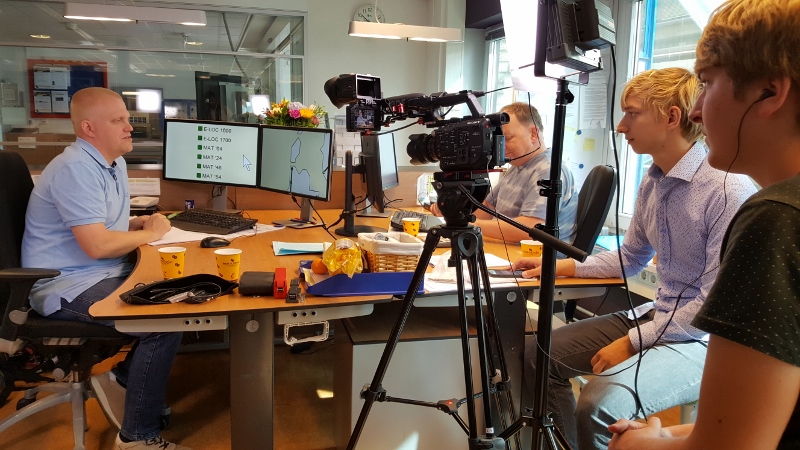
“Het allerbelangrijkste is dat je je iemand van het team voelt”, zegt Maikel Bader. Sinds bijna een jaar maakt hij bij NS de personeelsroosters, naar grote tevredenheid van zowel Bader als zijn werkgever. Daar waren wel een paar aanpassingen voor nodig, zoals een groot scherm, want Bader heeft een visuele beperking. Hij komt iedere dag met zijn hond naar het werk, maar is daar volledig inzetbaar.

We zijn bij de NS om twee video’s te maken voor de website Samenvoordeklant over het aan het werk helpen van mensen met een zintuiglijke beperking. Bader vertelt over zijn eigen werk en arbeidsconsulent Marja Joosten van Werkpad vertelt wat deze doelgroep zo bijzonder maakt. De video’s – gemaakt door het jonge Utrechtse bedrijfje Kyver – zijn binnenkort te zien op www.samenvoordeklant.nl.